
For many women, hearing the words “fibroid” or “ovarian cyst” can feel worrying — but in reality, these are fairly common conditions, and a large number of them are gentle in nature. Some need nothing more than periodic observation, while others may call for a closer look and, in selected cases, a planned procedure. Among the modern options doctors may discuss, laparoscopic care stands out for its careful, minimally-invasive approach. For anyone searching for a Gynaecologist in Kolkata, the wisest starting point is always a proper consultation — because each situation is different and any decision should rest on an individual medical evaluation.
A Quick Look at Fibroids and Ovarian Cysts
Fibroids are non-cancerous growths that can form in or around the uterus, and ovarian cysts are fluid-filled sacs that may develop on the ovaries. Both are common, and in plenty of cases they cause little to no trouble. Where symptoms do appear, women sometimes report:
- Heavier or unpredictable menstrual cycles
- A dull ache or sense of pressure in the lower abdomen
- Bloating or fullness
- Worries connected to fertility
- Discomfort that gets in the way of daily life
A personalised review with the Best Lady Gynaecologist in Kolkata helps clarify what’s going on and what, if anything, needs to be done.
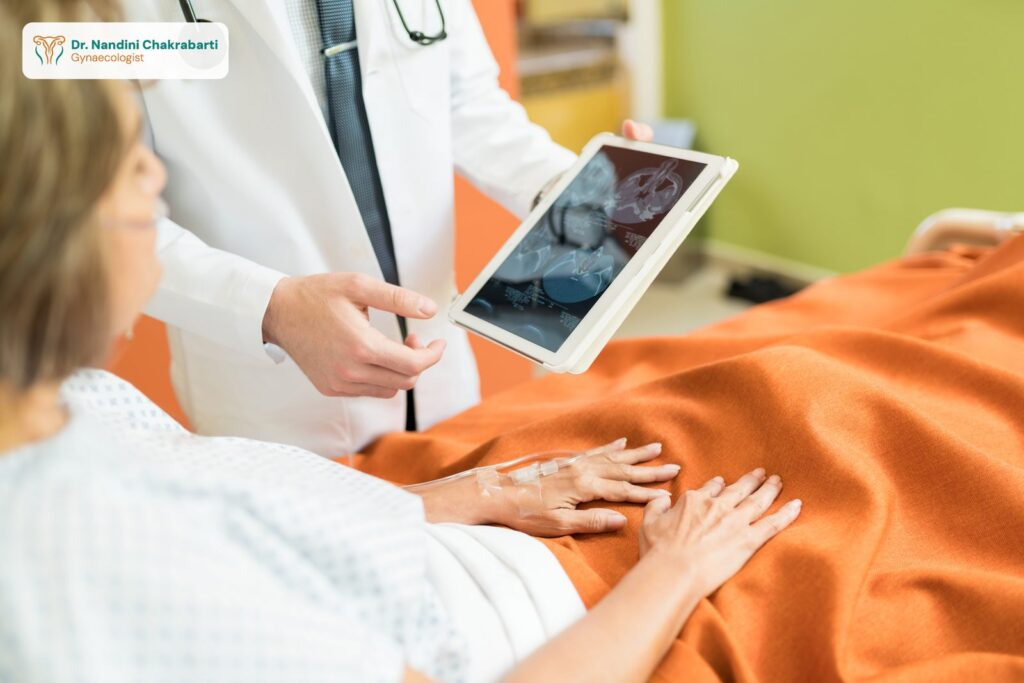
What “Laparoscopic” Actually Means
Laparoscopic care is a technique that allows the doctor to look at and treat these conditions through a few small keyhole openings, rather than one large cut. A slim camera guides the procedure, so the doctor can work with precision while being gentle on the healthy tissue around the area. It’s often described as keyhole surgery for exactly this reason.
Why So Many Women Find It Reassuring
Depending on the individual case, some of the commonly noted benefits include:
- Only small incisions, and therefore minimal scarring
- A recovery experience that is often smoother
- Generally less discomfort afterwards
- An approach that can support fertility preservation where suitable
- Neater cosmetic results
It’s worth remembering that whether this approach fits a particular person is always a clinical decision, made after proper evaluation.
Knowing When to Reach Out
It may help to talk to a specialist if you experience:
- Ongoing pelvic discomfort or pressure
- A noticeable change in your usual menstrual pattern
- Recurring bloating or fullness
- Difficulty while trying to conceive
Speaking up early often means the available options are simpler and gentler.
What a Consultation Usually Involves
A first visit is mostly a calm conversation — understanding your symptoms, your history, and your concerns. From there, the doctor may suggest a simple scan or test to get a clearer picture. There’s no pressure to rush into anything; the goal is to understand your body first and then decide on the most suitable, least intrusive path.
Learn More About Women’s Health
To explore women’s wellness and modern Gynaecological Care in more detail, you can visit the Dr Nandini Chakraborty YouTube channel, which shares helpful videos on wellbeing, treatment guidance, and patient education.
This article is for general awareness only and is not a substitute for professional medical advice. Please consult a qualified doctor for diagnosis and treatment.